The Stolen Christmas Sack
The Magical Cocoa of Santa Claus
Why does Santa always drink the same cocoa on his journeys, century after century? The story behind it is about a journey, a surprise, and a taste that has lasted to this day.
Damaris and the First Cocoa
Damaris, too, had heard of the novel drink gaining popularity across seventeenth-century Europe. Cocoa was considered precious, exotic, and refined, one of those rare curiosities travellers spoke of and that courts regarded with great curiosity.
Damaris lived with Casiric in Central Europe, yet her task carried her far beyond its borders. As keeper of the weather balance, she travelled distant lands, observing currents, winds, and the turning of the seasons. Along the way she encountered people, goods, and customs still barely known in her homeland.
On one such journey she acquired cocoa. She had heard of its special reputation, and that in its distant homeland it was regarded as a drink of almost divine importance. That stirred her curiosity. But above all, she wanted to surprise Casiric with it.
To Damaris, her husband was far more than an ordinary man. She knew his strength, his wisdom, and the vast stretches of time his life spanned. People might take him for an old wanderer, a hermit, or at times even a divine being. To her, he was simply her beloved Casiric. And yet she liked the idea of bringing him a drink praised as the drink of the gods.
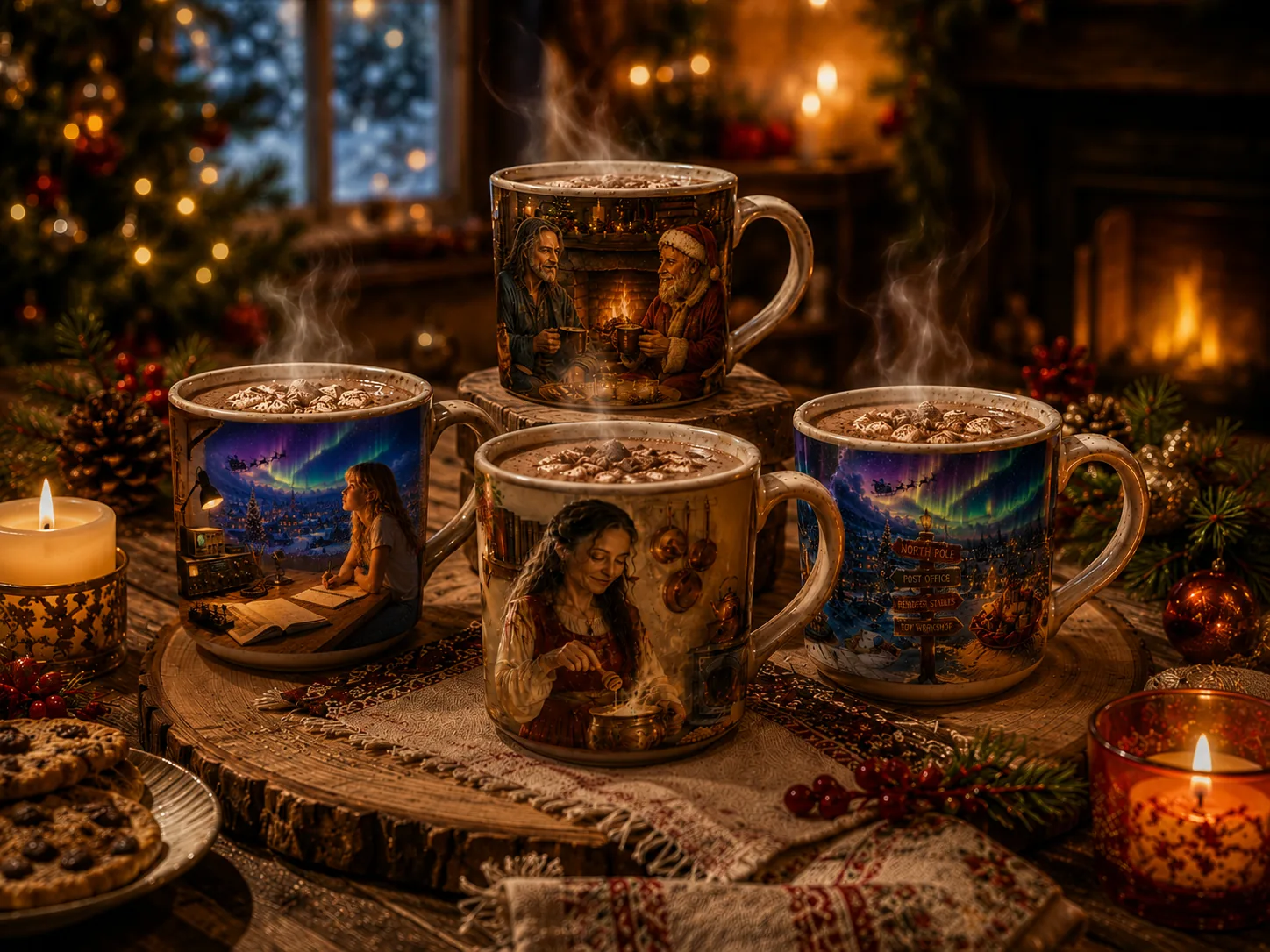
When she returned from one of her journeys, she found Casiric by the fire in the house, together with Santa Claus. The two were deep in one of their long conversations, as so often in that time. Santa was downcast, discouraged, and doubted his purpose. Casiric gave him exactly the courage he so urgently needed and reminded him why Santa had once begun carrying joy and hope to people.
Damaris decided, without further ado, that both men should taste her new discovery.
She was not yet satisfied with the original taste, though. The cocoa was strong, dark, and bitter. So she prepared it her own way. She added honey, some cane sugar, and spices whose effect and interplay she knew from her travels, each unremarkable on its own, yet together as if made for this one drink. Later she began using milk, adjusting the ratio again and again until the cocoa tasted smooth, rich, and still full-bodied.
Casiric knew his wife's skill in the kitchen and tasted it without hesitation. Santa did the same.
No history book has ever recorded what truly happened, but the cocoa suited the two men's taste so perfectly that Damaris never really needed to change her recipe again. Casiric loved it, and Santa came to associate it with those long conversations in which he found renewed courage and confidence beside his old friend.
From then on, Damaris's cocoa belonged to their evenings together. While wind and snow swirled around the house outside, Casiric and Santa sat by the fire, talking about the world, about responsibility, and about all those people who depended on hope. Damaris set the steaming cups before them and soon knew that one pot would never be enough.
Santa came back to them gladly, again and again, over the years that followed. He surely came for Casiric's counsel and friendship. But just as surely, he looked forward to the cocoa. It had become, for him, a symbol of his friendship with Casiric and Damaris, and it kept motivating him anew on his journeys.
Many years later, Santa's wife Emily and Damaris also exchanged notes on how to prepare it. Damaris explained the blend, the spices, and the small touches to her friend that turned a bitter drink into something warm and special. Emily carried this knowledge back to the North Pole, and that is how the cocoa finally found its permanent place in Santa's house as well.
Did You Know?
Cocoa originates in Central America. The Maya, and later the Aztecs, drank it as a bitter beverage spiced with chili, and prized the beans so highly that they even used them as currency.
Only in the sixteenth century did the Spanish bring cocoa to Europe. There it was sweetened with sugar and became an expensive luxury drink of the nobility.
Since the nineteenth century, hot chocolate has been part of the Christmas season in many European countries, tied to the tradition of mulled drinks and Christmas markets. Spices that once travelled the old trade routes still flavour many a winter cocoa today. Which ones exactly Damaris chose for her blend is revealed in the full recipe below.
Frequently Asked Questions
How do I get the file?
Straight after purchase via Payhip, by download link, and also by email. No customer account required.